



Kent joins national call for residents to delay disposing of fridges and freezers where possible
Published: 24/07/2026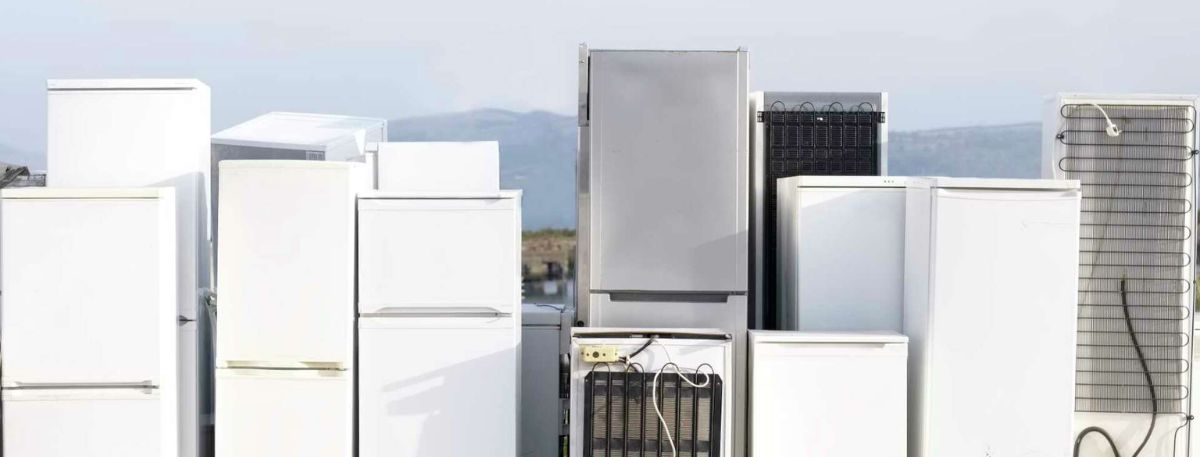
Kent County Council (KCC) is asking residents to delay disposing of unwanted fridges and freezers, or consider alternative options where appropriate, as a national shortage of treatment capacity reaches critical levels across the UK.
The issue is affecting local authorities throughout England and is not unique to Kent. A significant reduction in the number of specialist facilities able to process waste fridges and freezers has created severe pressure on the entire system, with a number of treatment sites having been taken out of operation following fires and other operational issues.
As a result, national treatment capacity has fallen dramatically, leaving councils across the country facing increasing challenges in managing waste temperature exchange equipment (WTEE), which includes fridges, freezers and other cooling appliances.
Household Waste Recycling Centres remain open and continue to accept fridges and freezers. The council is asking residents to consider delaying disposal where practical and safe to do so in order to reduce pressure on the national system.
KCC has been working closely with the Environment Agency, Defra, district and borough councils, and its contracted Producer Compliance Scheme to minimise disruption for residents and maintain services for as long as possible.
However, despite extensive planning and contingency measures, the situation has now reached a critical point where councils across the country, including KCC, are having to implement temporary storage arrangements to maintain services.
What KCC is doing
To help maintain services, KCC is:
- working closely with Defra and the Environment Agency to identify solutions
- utilising contingency arrangements to safely store additional fridges and freezers while treatment capacity remains constrained
- working with national regulators and industry partners to ensure services can continue
- continuing to accept fridges and freezers at Household Waste Recycling Centres wherever possible
- working with district and borough councils to manage increasing pressures on bulky waste collections and fly-tipping clearances
KCC has secured temporary storage arrangements to help manage the immediate pressures facing the sector. However, these measures do not resolve the underlying national shortage of treatment capacity and can only provide temporary resilience while treatment outlets remain constrained.
What residents can do
While Household Waste Recycling Centres continue to accept fridges and freezers, residents are being asked to help reduce pressure on the system by considering alternative options before arranging disposal.
Where possible, residents should:
- continue using appliances that remain safe and in working order
- explore reuse, repair or donation opportunities for working appliances
- consider whether disposal can be delayed until capacity within the national treatment network improves
- only present appliances for disposal where it is necessary to do so.
Residents should be aware that collection and disposal timescales may be longer than usual while the national situation continues.
"This is a national issue affecting councils across England and, currently, there is no clear timeframe for when treatment capacity will return to normal," Jamie Henderson, Cabinet Member for Environment, Coastal Regeneration and Public Health said. "While we've put additional measures in place to help maintain services in Kent, we're asking residents to help by considering whether disposal can be delayed, and by exploring reuse or repair options where possible.
"We will continue working with Government, regulators and industry partners to support a national solution and minimise disruption for Kent residents."
KCC is continuing discussions with Defra, the Environment Agency and industry partners to ensure that the producer responsibility principles which underpin the scheme are upheld and that any additional costs arising from the current national capacity shortage should not fall to Kent taxpayers.